
The Mayfly Life Cycle: Unlocking the Hatch to Catch More Fish
If you’ve spent time on a trout stream during a hatch, you’ve likely seen it—the sudden flutter of wings, fish rising in rhythmic pulses, and tiny insects dancing in the air like confetti. What you’re witnessing is one of nature’s most fascinating and essential events: the mayfly hatch.
Understanding the life cycle of the mayfly is one of the most important keys to becoming a more successful fly angler. These insects are central to the diet of trout and many other fish species. By matching the hatch, you’re speaking the native language of the river—and the trout are listening.
What Are Mayflies?
Mayflies are aquatic insects belonging to the order Ephemeroptera. Their name comes from the Greek word ephemeros, meaning short-lived—which perfectly describes their fleeting time as adults. There are over 3,000 species of mayflies worldwide, and they’re found in clean, well-oxygenated freshwater systems: rivers, streams, lakes, and ponds.
They’re a vital part of the aquatic food web and a favorite meal of trout, bass, and panfish throughout the year—especially in spring and summer.
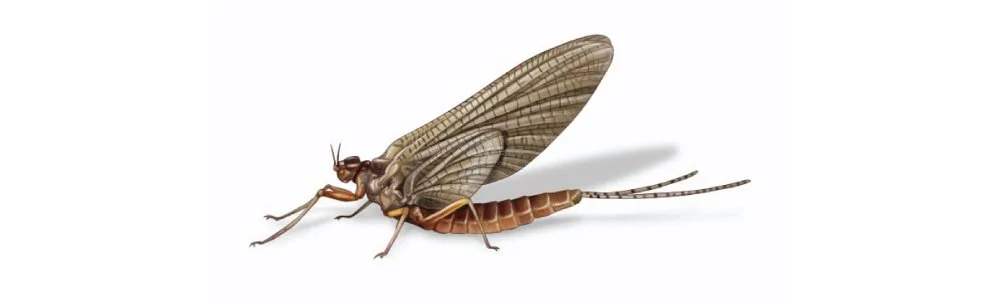
May Fly
The Mayfly Life Cycle: Four Key Stages
Mayflies go through a simple metamorphosis—egg → nymph → emerger → adult. Unlike most insects, they have two winged adult stages: the dun and the spinner.
1. Egg Stage
• Laid on the water’s surface by female spinners after mating.
• Sink to the bottom and adhere to rocks, gravel, or vegetation.
• Hatch into nymphs in days to weeks, depending on the species and water temperature.
🎣 Fishing Tip: Not typically imitated, but the beginning of the cycle.

May Fly Nymph
2. Nymph Stage
• Spends most of its life here—anywhere from several months to over a year.
• Lives on or under rocks, in weeds, and in sediment.
• Mayfly nymphs are swimmers, clingers, or crawlers, depending on species.
🎯 Best Imitations:
• Pheasant Tail Nymph
• Hare’s Ear Nymph
• Copper John
• Mayfly-specific patterns like the Sawyer Nymph
🎣 How to Fish Them:
• Use a dead-drift under an indicator or Euro nymphing setup.
• Add weight to get the fly near the bottom where nymphs dwell.
• Use subtle twitches to imitate swimming behavior in slack water.
3. Emerger Stage
• When the nymph rises to the surface to hatch into a dun.
• Vulnerable and often helpless—many are eaten before breaking the surface.
• Some species struggle in the surface film, attracting trout attention.
🎯 Best Imitations:
• RS2
• Barr’s Emerger
• Soft Hackle Pheasant Tail
• Klinkhåmer Special
🎣 How to Fish Them:
• Swing soft hackles just under the surface.
• Let emergers drift near or in the surface film.
• Fish during pre-hatch or active hatch windows when rises are subtle.

May Fly Dry Fly
4. Adult Stage (Dun and Spinner)
• Dun: First adult form, wings are upright like a sailboat.
• Flies away to rest on land and molt into a spinner.
• Spinner: Final stage with clear wings; mates, lays eggs, and dies.
🎯 Best Imitations:
• Parachute Adams (generalist)
• Comparadun
• CDC Biot Dun
• Rusty Spinner (essential for spinner falls)
🎣 How to Fish Them:
• Drift dry flies dead on the surface with minimal drag.
• Use a long leader and delicate presentation.
• Spinner falls often occur at dusk—use silhouettes or rusty spinner patterns.
📍 Where and When Do Mayflies Hatch?
Mayflies hatch anywhere they live, but the most famous hatches occur in cold, clean rivers and lakes.
Seasonal Hatch Guide (General):
• Spring: Baetis (Blue-Winged Olives), March Browns
• Early Summer: PMDs (Pale Morning Duns), Cahills
• Mid to Late Summer: Tricos, Slate Drakes
• Fall: Late-season Baetis, Mahogany Duns
Different species hatch at different times of day—some at midday, others right before dark. Learning the timing in your local waters is essential.
🧠 Why It Matters for Fishing
Trout are selective feeders. During a hatch, they often key in on one specific life stage. If you’re fishing a dun pattern when they’re feeding on emergers, you’ll get refusals.
By matching the right pattern, size, and stage, you’ll increase hookups dramatically.
Match the Hatch Checklist:
✅ Observe the water—look for bugs in the air and on the surface
✅ Turn over rocks—find nymphs and see their size/color
✅ Note rise forms—sips (emergers), slashes (duns), or boils (nymphs)
✅ Match size before color—fish are more size-selective than you think
The mayfly may be small, but its impact on trout fishing is massive. These delicate insects drive some of the most exciting fishing of the year. When you understand their life cycle—from the hidden nymph to the fluttering spinner—you unlock a new level of skill and connection with the water.
Next time you’re on the river and see that first sailboat-winged dun drift by, pause. Smile. You’re not just fishing. You’re taking part in a timeless rhythm between trout, insects, and angler.
Thanks for reading this blog post! If you’re a fishing fanatic like me, show your passion by rocking one of the fishing shirts available in my shop. Every purchase helps support my mission to spread the joy of fishing, protect the waters we love, and keep the spirit of the outdoors alive.
Tight lines,
Danny Egan
Egan Fishing
