
The Anatomy of Trout: A Guide to Identifying the Species We Love to Chase
Trout are more than just game fish—they’re living works of art shaped by the waters they inhabit. From the alpine creeks of the Rockies to the freestone rivers of the East, trout adapt to their environments in ways that make them as fascinating to study as they are to catch. Whether you’re a seasoned angler or just getting started, learning to identify trout by their physical features is not only useful—it’s part of the deeper connection we share with these fish and the places they live.
In this post, we’ll break down the anatomy of trout and give you a guide to identifying some of the most iconic species: Brook Trout, Rainbow Trout, Golden Trout, Brown Trout, and Cutthroat Trout. We’ll talk about where they’re found, what makes each species unique, and how to spot them in the net or on the end of your line.
The Basic Anatomy of a Trout
Before we dive into the differences between species, let’s take a look at the shared anatomy most trout have in common:
• Adipose Fin – The small, fleshy fin between the dorsal fin and the tail. A key trait that separates trout and salmonids from other fish.
• Dorsal Fin – Located on the back, used for stabilization.
• Caudal Fin (Tail) – Propels the trout through the water.
• Pelvic and Pectoral Fins – Aid in movement and steering.
• Anal Fin – Located on the underside, near the tail.
• Lateral Line – A visible line running along the side of the fish that helps them detect vibration and movement in the water.
• Gills – Located behind the head, responsible for oxygen exchange.
• Mouth and Jaw Structure – Varies by species and can be a clue in identification.
The Major Trout Species and How to Identify Them
Brook Trout (Salvelinus fontinalis)
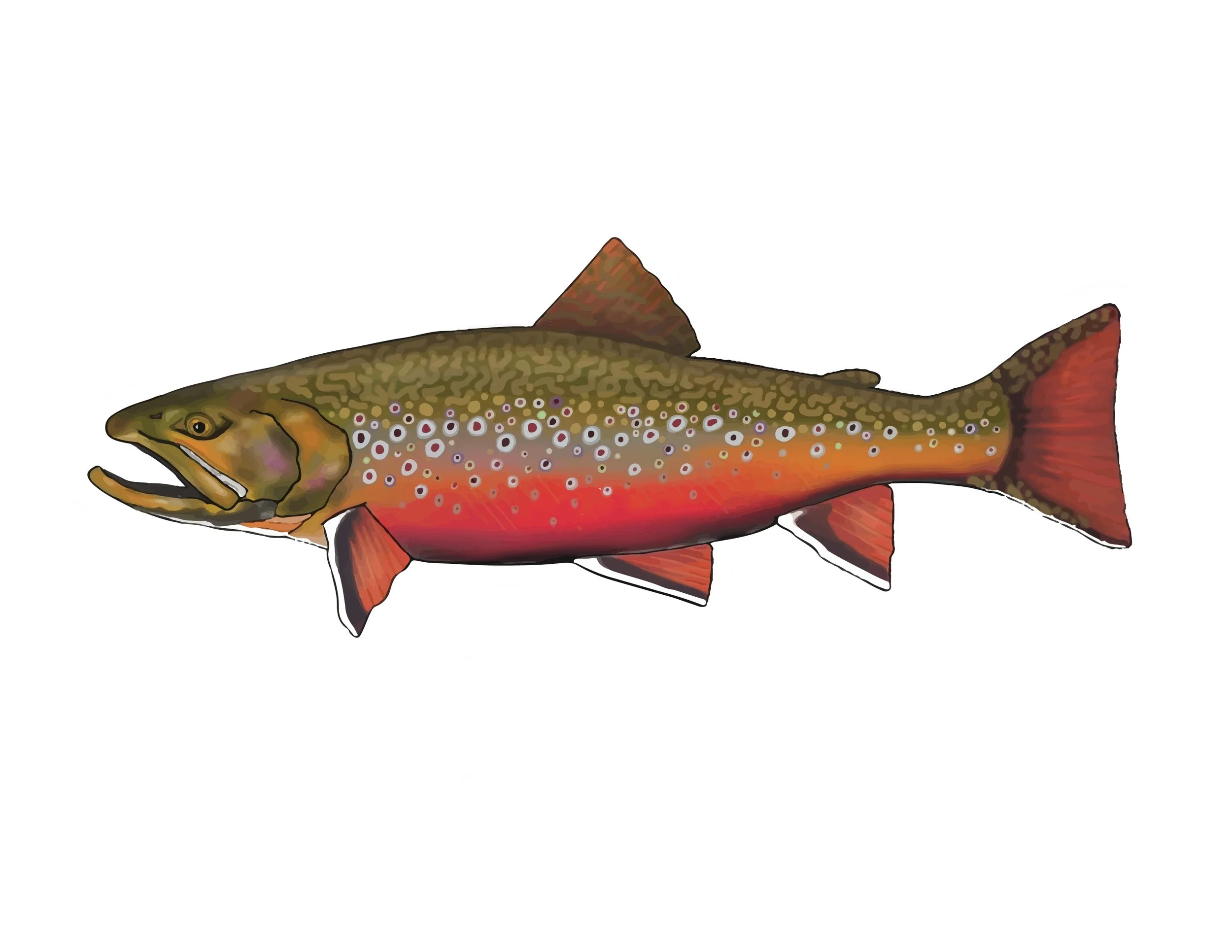
Despite the name, brook trout are technically a char, a cousin of the trout and salmon family.
Identification:
• Deep olive-green or dark brown backs with wormlike vermiculations (squiggly lines).
• Flanks have vibrant spots—red dots surrounded by blue halos.
• Distinctive white leading edges on the lower fins (pectoral, pelvic, and anal).
• Smaller, often found in high-elevation streams and cold creeks.
Where They’re Found:
• Native to the Eastern U.S. and Canada.
• Found in cold, clean mountain streams and lakes across North America.
• Thrive in small, spring-fed creeks.
Rainbow Trout (Oncorhynchus mykiss)
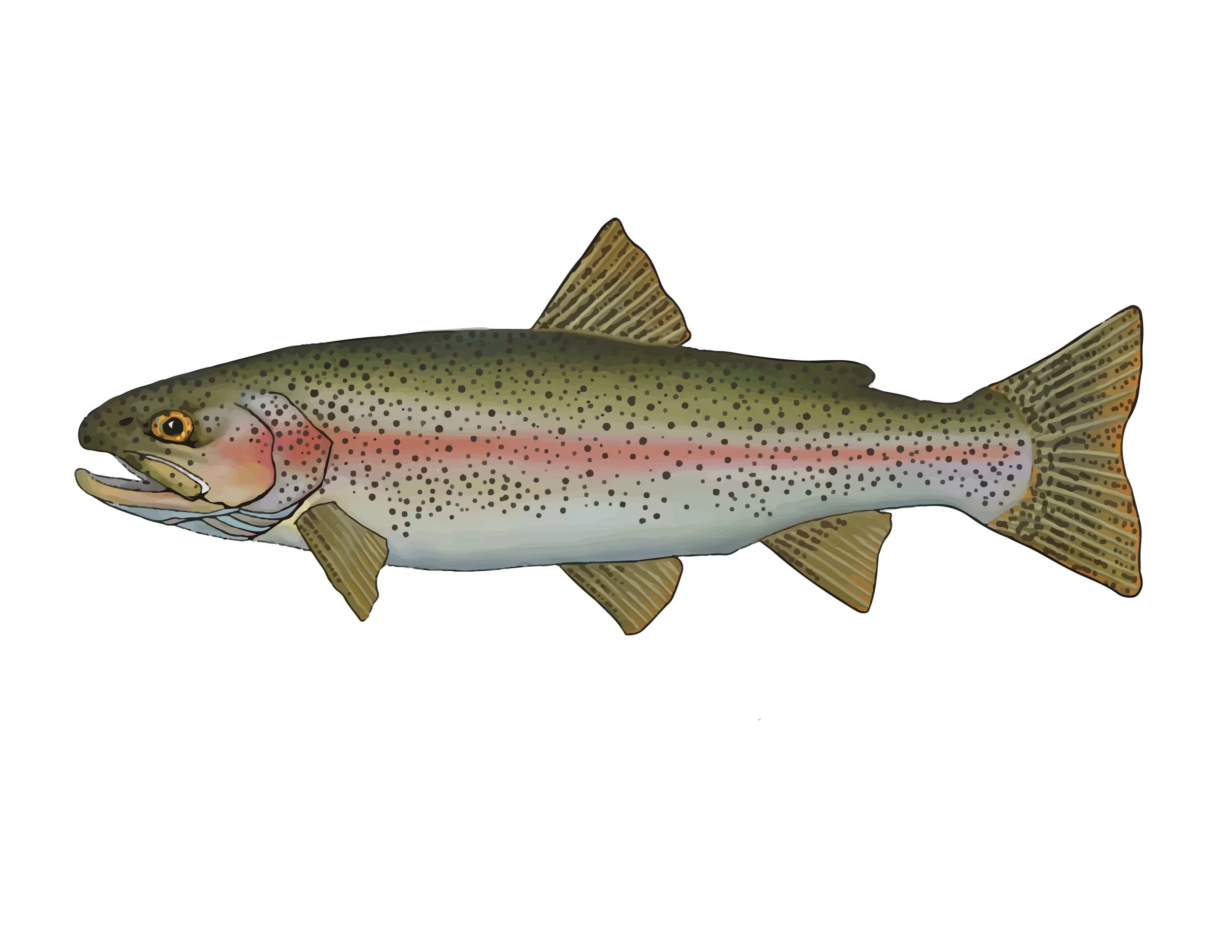
One of the most widely stocked and recognized trout species in the world.
Identification:
• Iridescent pink to red horizontal stripe along the lateral line.
• Black speckles on the back, dorsal fin, and tail.
• Streamlined body with a silvery or greenish hue.
• No white-edged fins like the brook trout.
Where They’re Found:
• Native to the Pacific Coast of North America.
• Widely introduced across the U.S. and world.
• Thrive in rivers, lakes, and reservoirs.
Golden Trout (Oncorhynchus aguabonita)
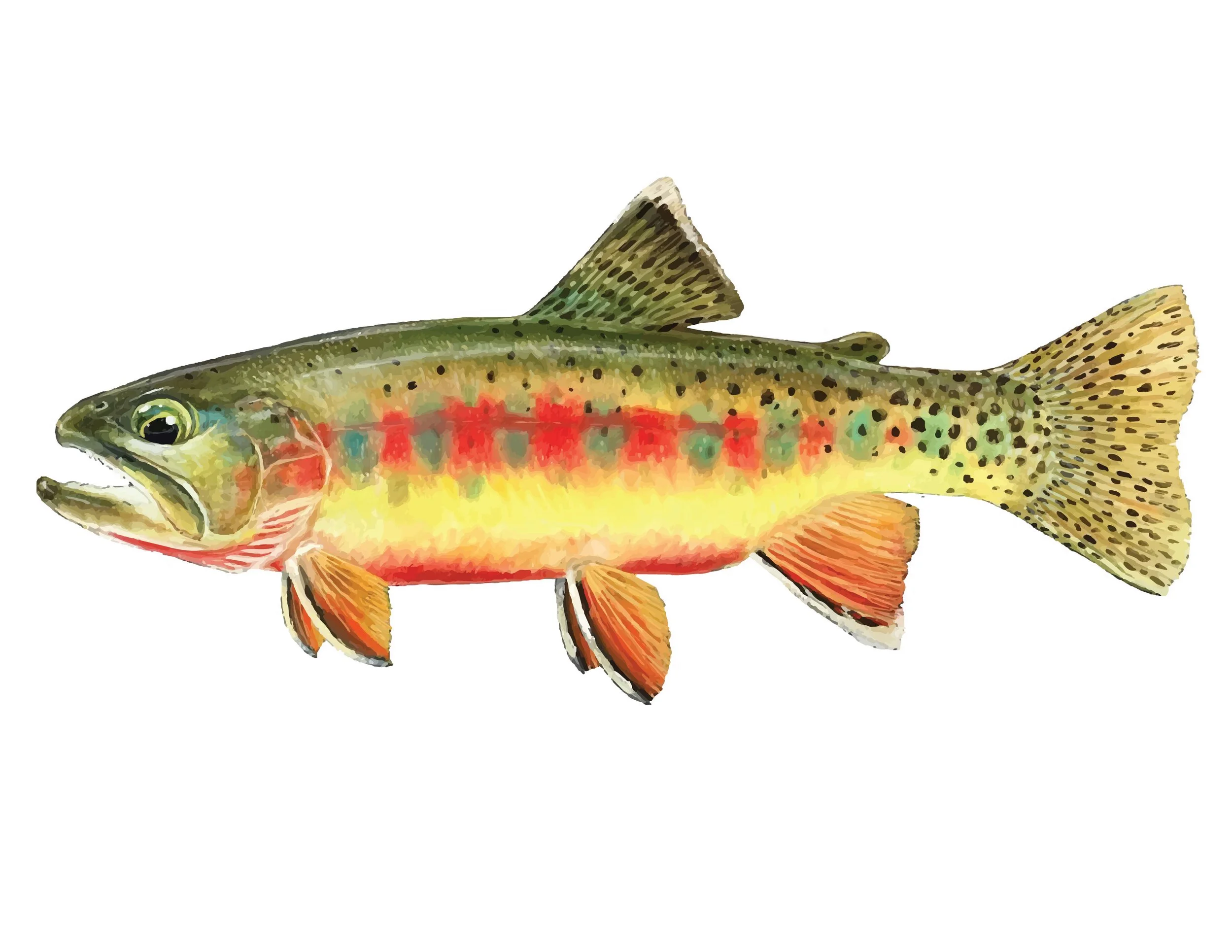
The state fish of California, golden trout are known for their brilliant coloration and are among the most prized catches in the trout world.
Identification:
• Vibrant golden-yellow body with reddish-orange belly.
• Two bold parr marks on each side as juveniles; sometimes persist into adulthood.
• Red lateral stripe, similar to rainbow trout.
• Fewer spots, usually near the tail.
Where They’re Found:
• Native to high-elevation streams of the Sierra Nevada.
• Require cold, pristine alpine water.
• Rare and protected in many places.
Brown Trout (Salmo trutta)
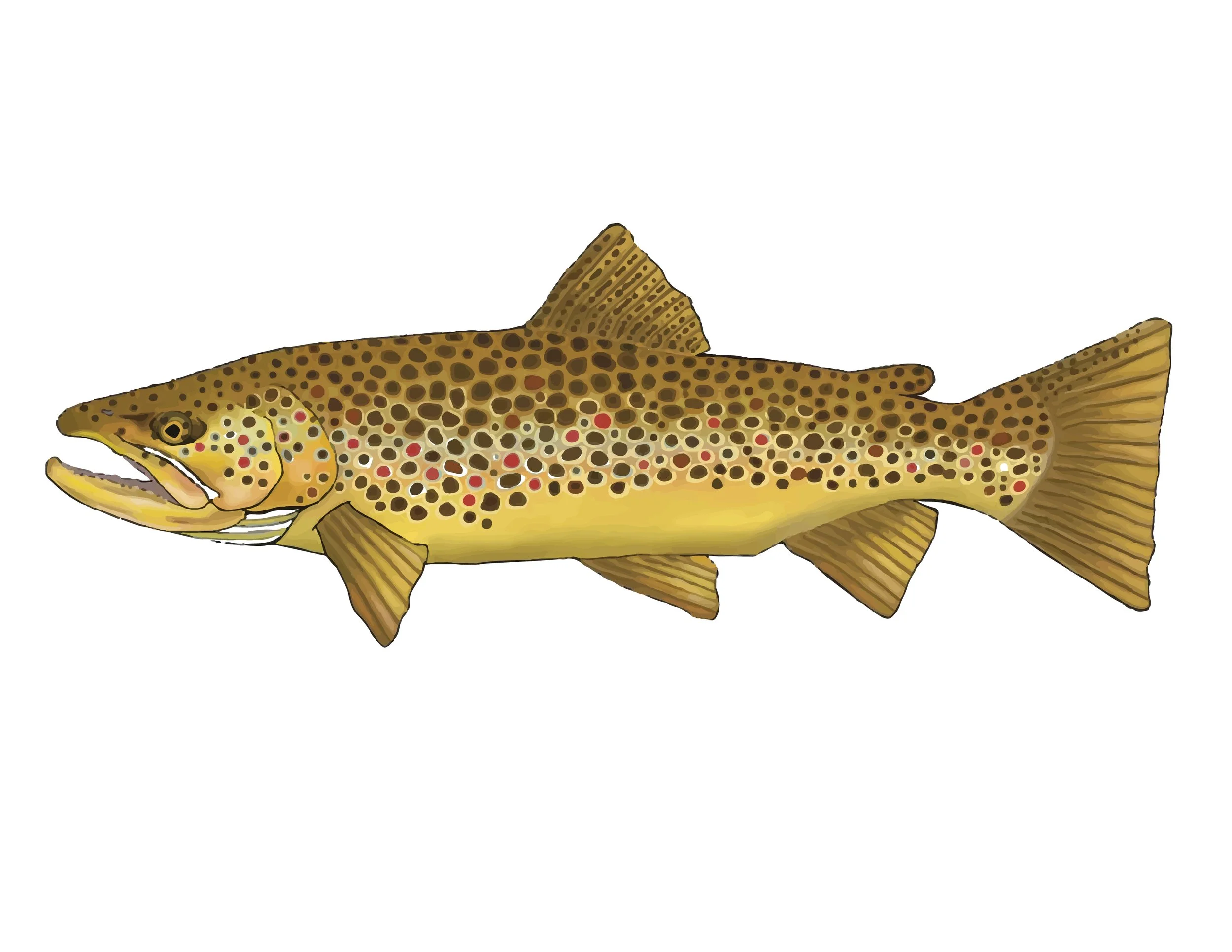
Native to Europe, brown trout were introduced to North America in the 1800s and have become one of the most challenging and revered sport fish.
Identification:
• Golden-brown to olive body with black spots and occasional red-orange spots surrounded by pale halos.
• More elongated head and jaw than other trout.
• Typically lack spots on the tail (a good clue).
Where They’re Found:
• Found in rivers and lakes throughout the U.S., especially in spring creeks and larger rivers.
• Can tolerate slightly warmer and more turbid water than other trout.
Cutthroat Trout (Oncorhynchus clarkii)
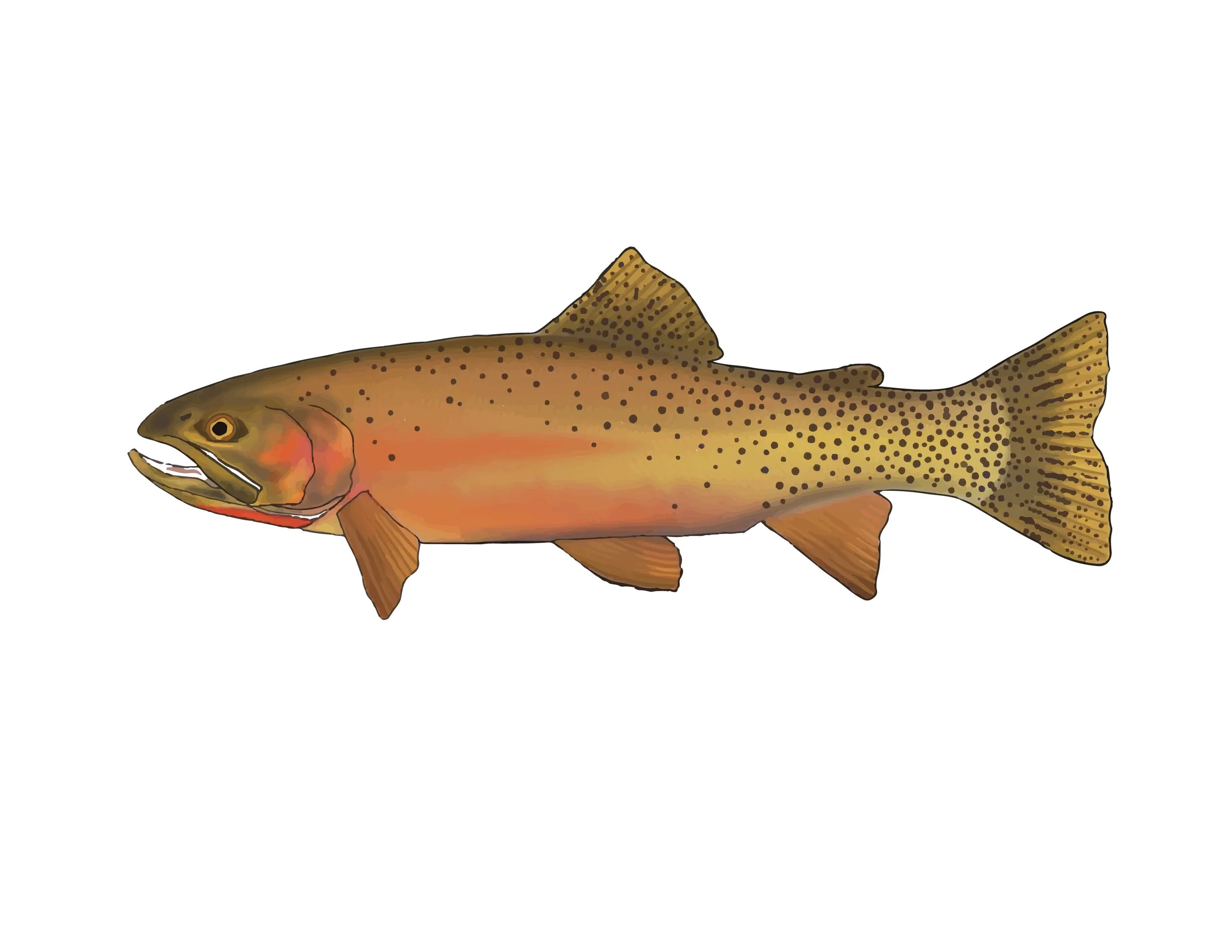
Named for the bold orange to red slashes under their jaws.
Identification:
• Wide variety of coloration depending on subspecies.
• Generally yellowish to olive-green with distinctive red-orange gill plate slashes.
• Black spotting that tends to be concentrated toward the tail.
• Can resemble rainbows—look for those throat slashes!
Where They’re Found:
• Native to the Western U.S.
• Found in mountain creeks, rivers, lakes, and high alpine zones.
• Many subspecies exist (Yellowstone, Lahontan, Snake River, etc.).
Why This Knowledge Matters
Being able to identify trout species goes beyond trivia—it deepens your understanding of the fish you pursue, helps with conservation efforts, and ensures you’re respecting local regulations. Some native species are protected, and many waters have species-specific bag limits or special handling rules.
Each trout species has its own story, habitat, and beauty. Recognizing them by their anatomy and markings brings you closer to the waters you fish and the wild things that live there. It’s not just about the catch—it’s about being part of the ecosystem, understanding your quarry, and fishing with knowledge and respect.
Next time you’re on the water, take a second to admire the colors, the spots, the shape of the jaw. Because the more you know about trout, the more you’ll appreciate every fish, big or small.
Thanks for reading this blog post! If you’re a fishing fanatic like me, show your passion by rocking one of the fishing shirts available in my shop. Every purchase helps support my mission to spread the joy of fishing, protect the waters we love, and keep the spirit of the outdoors alive.
Tight lines,
Danny Egan
Egan Fishing
