
Fishing for Trout in Stillwaters with Chironomids: Unlocking the Secret to Success
If you want to catch more trout in lakes, ponds, and reservoirs, there’s one fly you need to know: the chironomid. Often overlooked by beginners and underestimated by many anglers, chironomids—also known as midges—are among the most prolific and important food sources for trout in stillwater environments. Mastering how to fish them can be the key to unlocking some of your best days on the water.
What Are Chironomids?
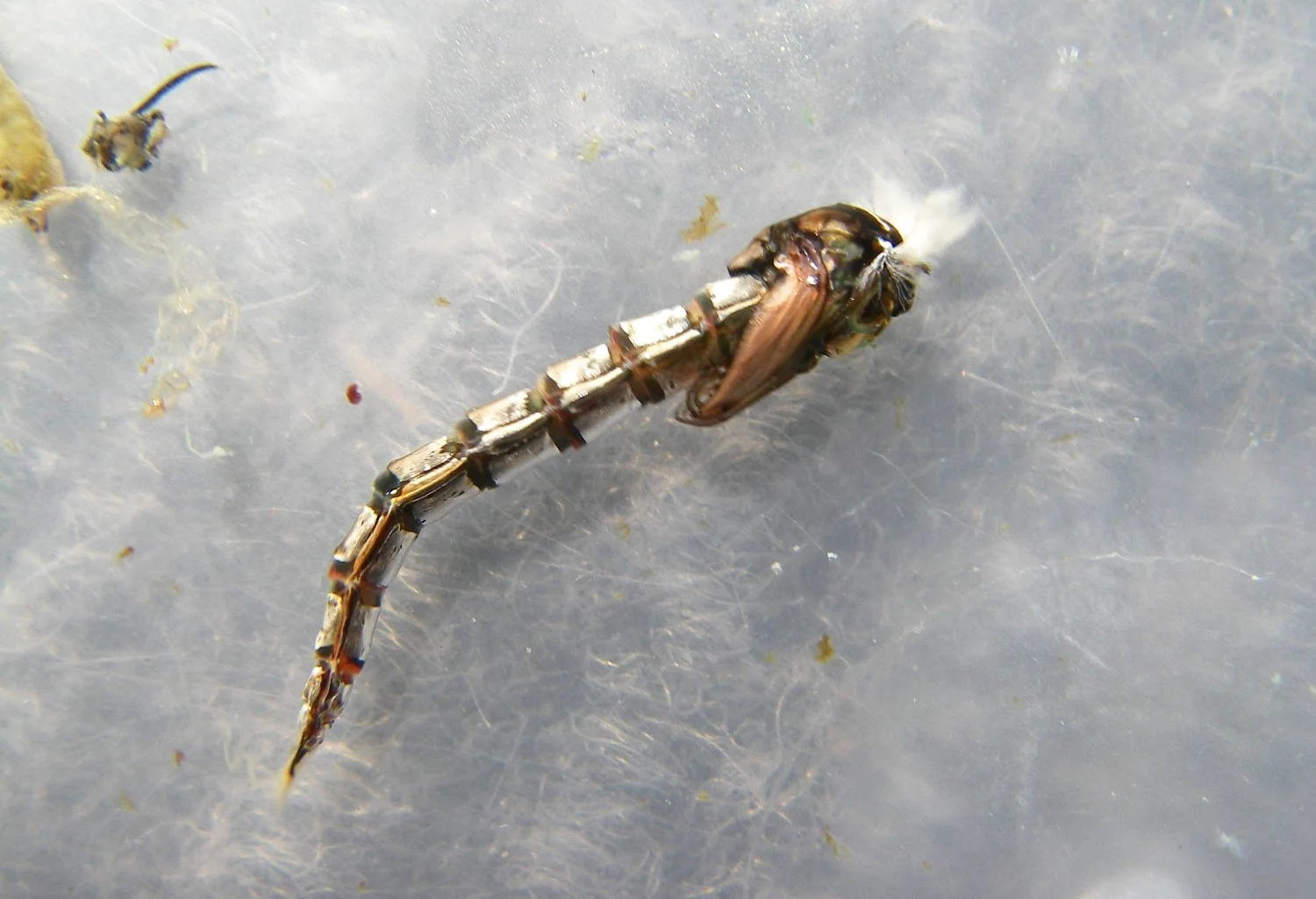
Chironomids are non-biting midges—tiny aquatic insects that belong to the Diptera family (true flies). They spend most of their life underwater, particularly in stillwater environments like lakes and ponds. These insects go through a complete life cycle: egg → larva → pupa → adult.
The larval stage is often red (earning them the nickname “bloodworms”) and lives buried in the mud or substrate at the bottom. As they transition into the pupal stage, they rise slowly through the water column, becoming incredibly vulnerable to feeding trout. It’s this pupal emergence, often in massive numbers, that makes chironomids so important in a trout’s diet.
Why Are Chironomids Important to Trout?
Trout feed heavily on chironomids—especially in stillwaters—because they are abundant, predictable, and high in protein. During a hatch, it’s not uncommon for thousands of these insects to rise from the lake bottom, creating a buffet for trout. In early spring and late fall, when other insects are scarce, chironomids are often the primary food source.
Because of this, trout will key in on them to the point of ignoring almost everything else. When you see trout rising in a lake with little surface activity, chances are they’re sipping chironomid pupae just below the surface.
Where to Fish Chironomids
Chironomids can be found in nearly every stillwater trout fishery across North America and beyond. You’ll often find success fishing them in:
• Shallow flats in the early season, where water warms up first.
• Drop-offs and shelves, where deeper water meets shallows.
• Near weed beds, where chironomids burrow and emerge.
• Inlets or outlets, where oxygenation is higher and fish often concentrate.
Use a depth finder or weighted flies to locate the depth at which fish are feeding—trout often suspend at a specific depth to intercept chironomids mid-emergence.
When to Fish Chironomids
Chironomids hatch throughout the year, but spring and fall are prime seasons for stillwater anglers. During these times, hatches can be dense and consistent, especially in mid-morning to early afternoon as water temperatures rise.
Even in the heat of summer or dead of winter, trout often feed on chironomid larvae near the bottom, making them a year-round option. Keep in mind, however, that hatch timing varies by location, elevation, and weather conditions.
How to Fish Chironomids
There are several effective ways to fish chironomids depending on depth, presentation style, and time of year. Here are three popular methods:
1. Indicator Nymphing (Suspended Chironomid Method)
• Use a strike indicator to suspend one or two chironomid patterns at the appropriate depth (often a few feet off the bottom).
• Set the depth carefully—this is critical. Use a slip indicator for deeper water.
• Let the flies sit mostly still or give them gentle twitches to mimic rising pupae.
• Use fluorocarbon tippet for a more natural sink rate and less visibility.
This method is deadly when trout are suspended and feeding in a specific layer of the water column.
2. Floating Line with Long Leader
• Use a floating fly line and a long leader (12–20 feet) with a chironomid pattern weighted to slowly sink.
• Cast out and allow the fly to sink for 30 seconds to a few minutes.
• Slowly retrieve with tiny strips or hand-twist retrieves to simulate an emerging pupa.
This is effective when trout are not feeding near the surface but are still actively cruising mid-depths.
3. Full Sinking Line
• For fishing deep water, especially early or late in the season when trout are hugging the bottom.
• Use a type 3–6 sinking line and a chironomid larva pattern (often red or maroon).
• Retrieve very slowly along the bottom, imitating a natural bloodworm.
This method is often productive when little surface activity is visible and fish are near the lakebed.
Choosing the Right Chironomid Pattern
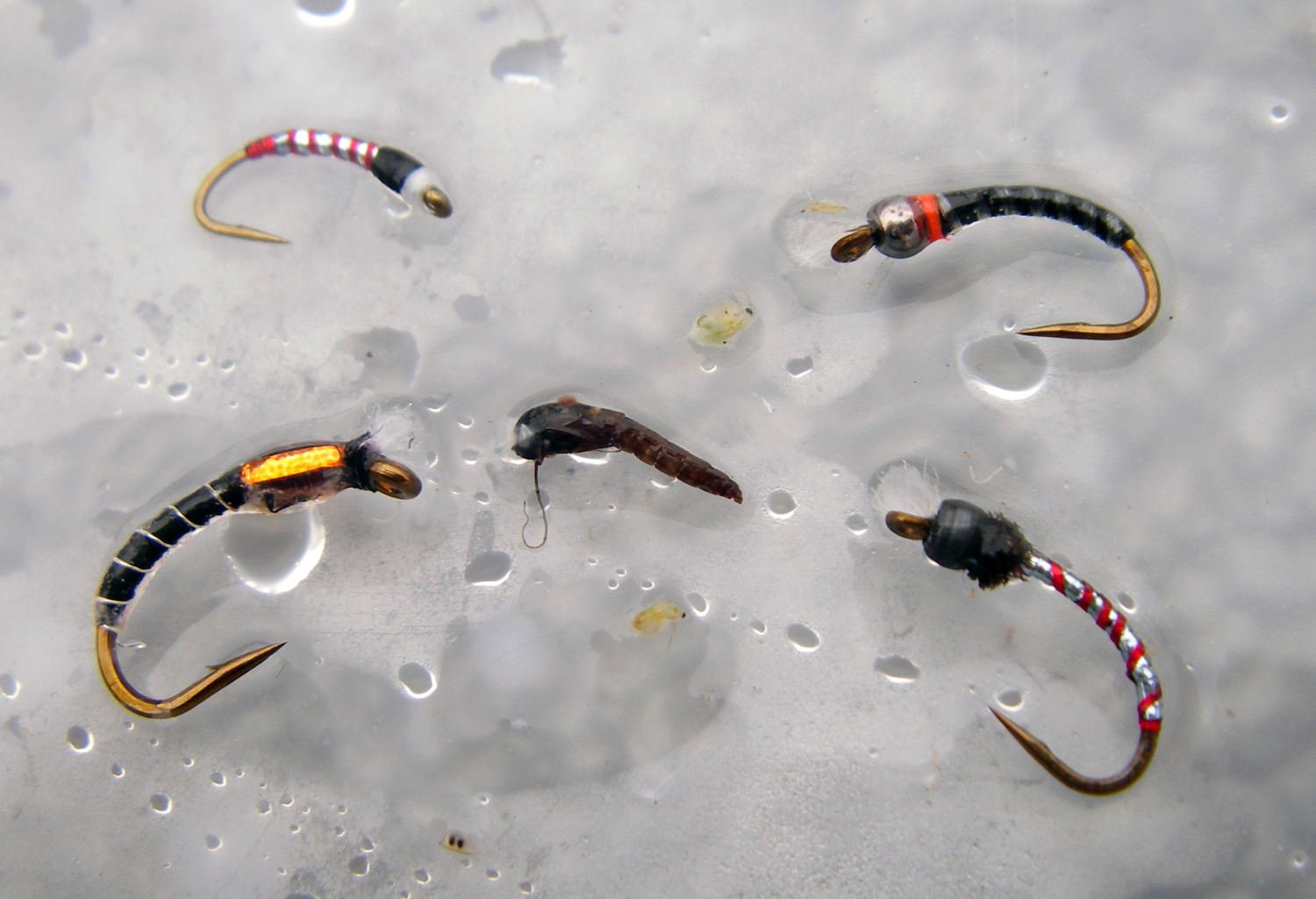
There are thousands of variations in size and color, but here are some go-to options:
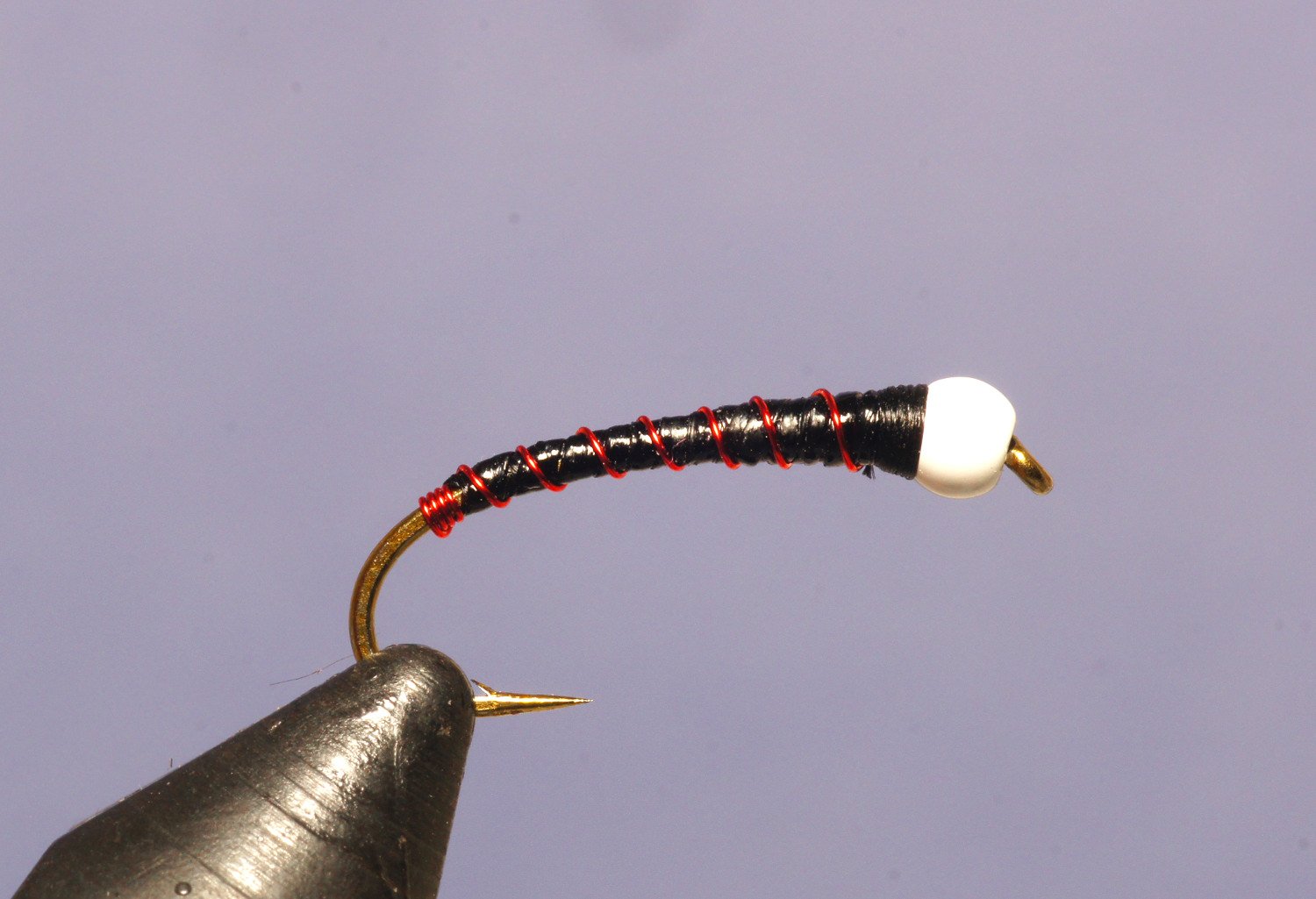
• Bloodworm (Larva): Red, maroon, or black thread body with a small bead or rib.
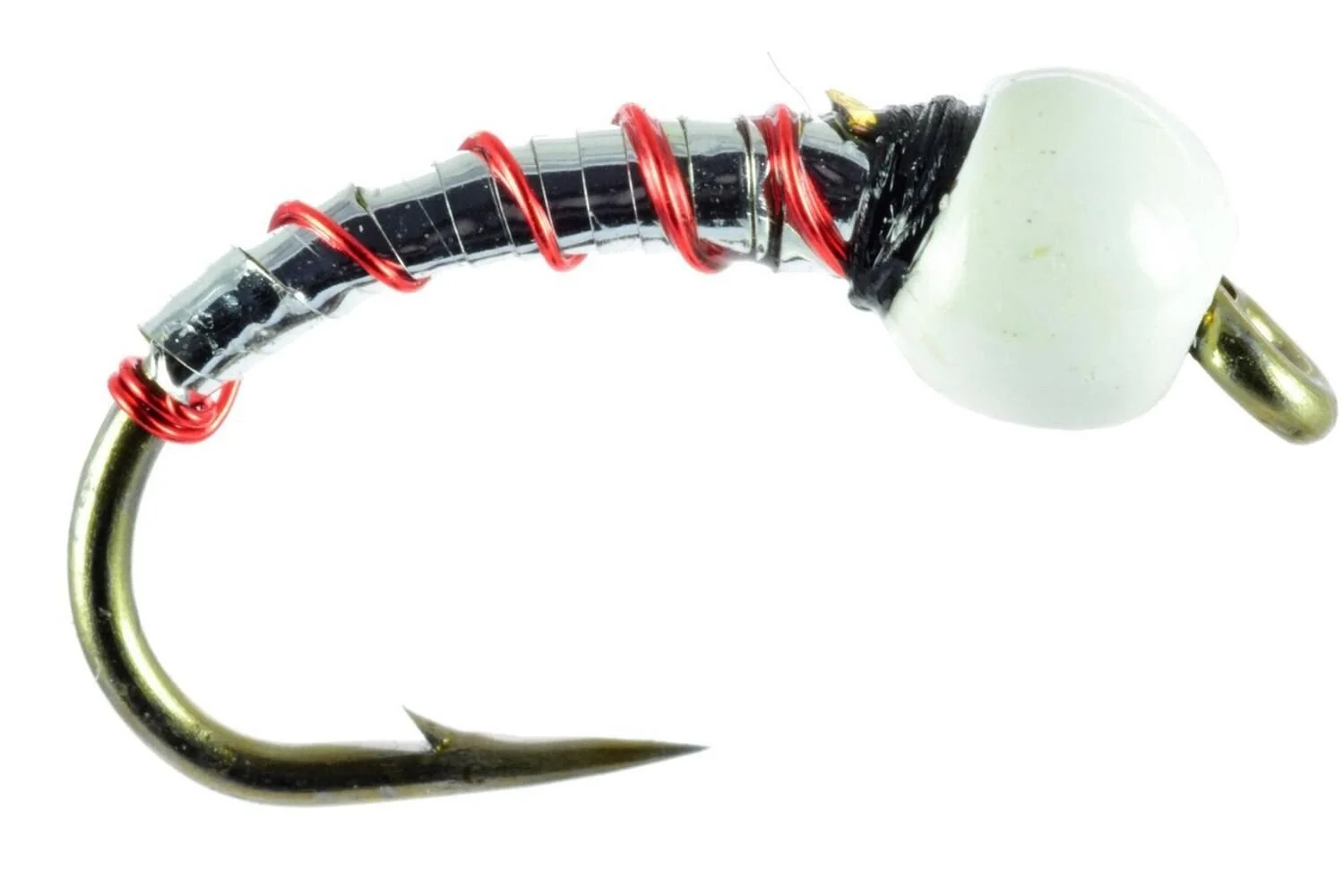
• Chromie (Pupa): Shiny silver with a red rib to imitate gas buildup inside the pupa.
• Black Beauty: A black-bodied, slim profile midge with a peacock thorax.
• Ice Cream Cone: White beadhead with a black or red body.
• Balanced Leeches & Balanced Chironomids: Sit horizontally in the water and are ideal for still presentations.
Size typically ranges from #12 to #20, depending on the hatch and the local lake.
Fishing chironomids may not be as glamorous as watching a trout crush a dry fly, but the results speak for themselves. On many stillwaters, chironomids outperform all other flies, and knowing how to fish them effectively will give you a serious edge.
Learn to read the water, adjust your depth, and match the hatch. The more you dial in your chironomid game, the more fish you’ll catch—and the more you’ll appreciate this humble little bug that keeps trout fed year-round.
Thanks for reading this blog post! If you’re a fishing fanatic like me, show your passion by rocking one of the fishing shirts available in my shop. Every purchase helps support my mission to spread the joy of fishing, protect the waters we love, and keep the spirit of the outdoors alive.
Tight lines,
Danny Egan
Egan Fishing
