
Triggerfish of Hawaii: Species, Habits, and How to Fish for These Colorful Reef Dwellers
If you’ve ever snorkeled, dived, or fished in the Hawaiian Islands, chances are you’ve encountered a triggerfish — quirky-looking, bold, and surprisingly tough for their size. Known for their powerful jaws, vivid colors, and territorial behavior, triggerfish are a staple of Hawaii’s reef ecosystems.
Whether you’re a spearfisher, shore angler, or simply a curious visitor, understanding the habits and species of Hawaiian triggerfish will give you a deeper appreciation for these fascinating reef residents — and help you land one, if that’s your goal.
What Are Triggerfish?
Triggerfish are a family of marine fish (Balistidae) characterized by their oval-shaped, laterally compressed bodies and tough skin covered in rough, sandpaper-like scales. Their name comes from the “trigger” spine on their dorsal fin, which they can lock in place to wedge themselves into crevices when threatened — or raise defensively when approached.
They are known for:
• Strong teeth and jaws designed to crush shells and coral
• Vivid colors and patterns
• Territorial behavior, especially when guarding nests
• Feisty attitudes, often punching above their weight when hooked
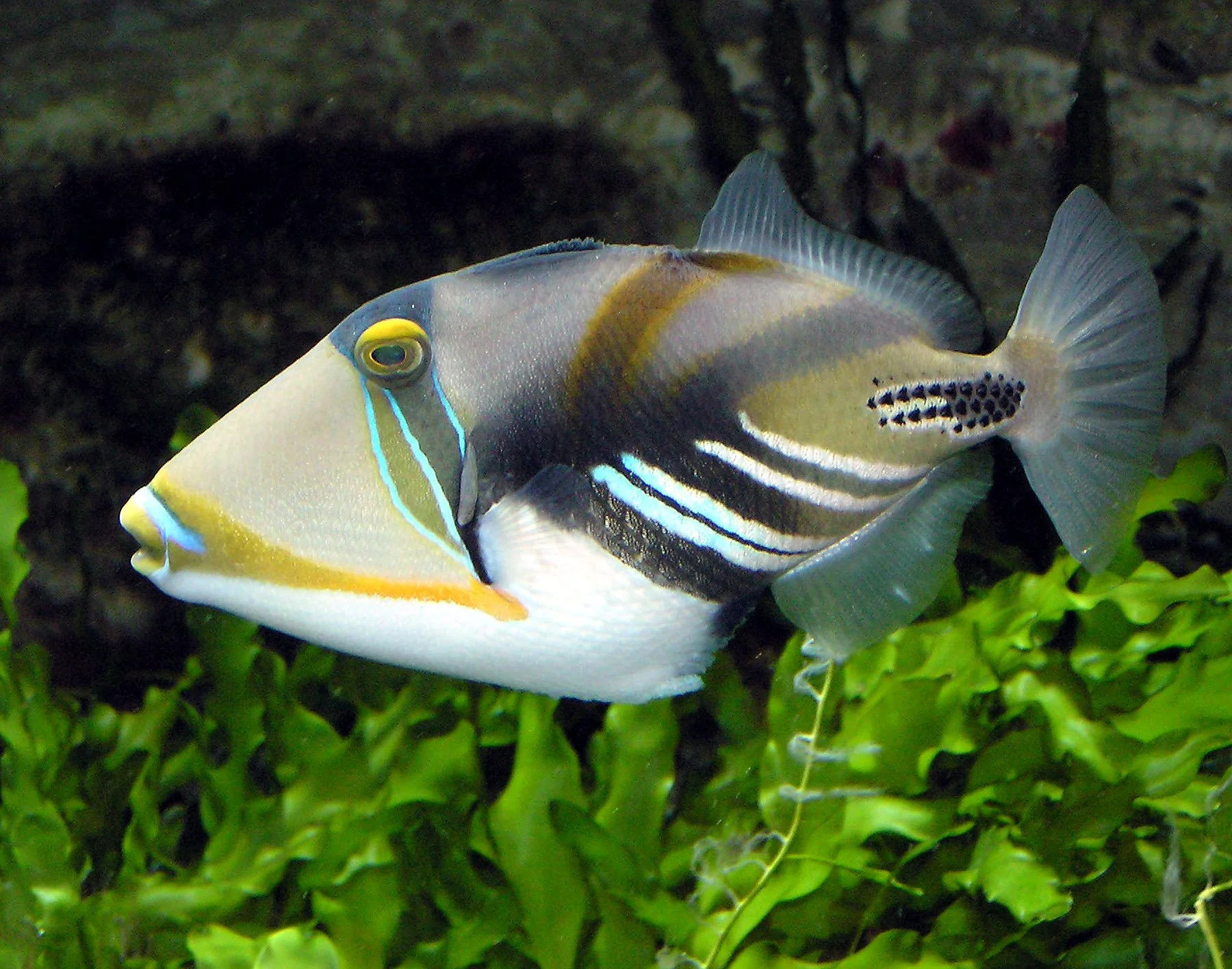
Tiggerfish
Hawaiian Triggerfish Species
Hawaii is home to several species of triggerfish, each with unique characteristics. Here are the most notable:
1. Humuhumunukunukuāpua‘a (Rhinecanthus rectangulus)
• Hawaii’s state fish
• Name means “triggerfish with a snout like a pig” (due to grunting sounds)
• Striking pattern of blues, yellows, blacks, and whites
• Found on shallow reefs and lagoons
• Grows up to 10–12 inches
2. Lagoon Triggerfish (Rhinecanthus aculeatus)
• Often confused with the Humuhumunukunukuāpua‘a
• Very similar in shape and color
• Bold and aggressive, especially when nesting
3. Gray Triggerfish (Balistes capriscus)
• Found in deeper reef areas and offshore structures
• Larger and more muscular, reaching 15–20 inches
• Less colorful but prized for firm, tasty meat
4. Black Triggerfish (Black Durgon) (Melichthys niger)
• Common on offshore reefs and drop-offs
• All-black body with occasional blue or green sheen
• Schools in large groups
• Good eating, though less commonly targeted
5. Pinktail Triggerfish (Melichthys vidua)
• Recognizable by its bright pink tail and dark body
• Typically found near reefs and outer slopes
• Strong fighter and relatively shy
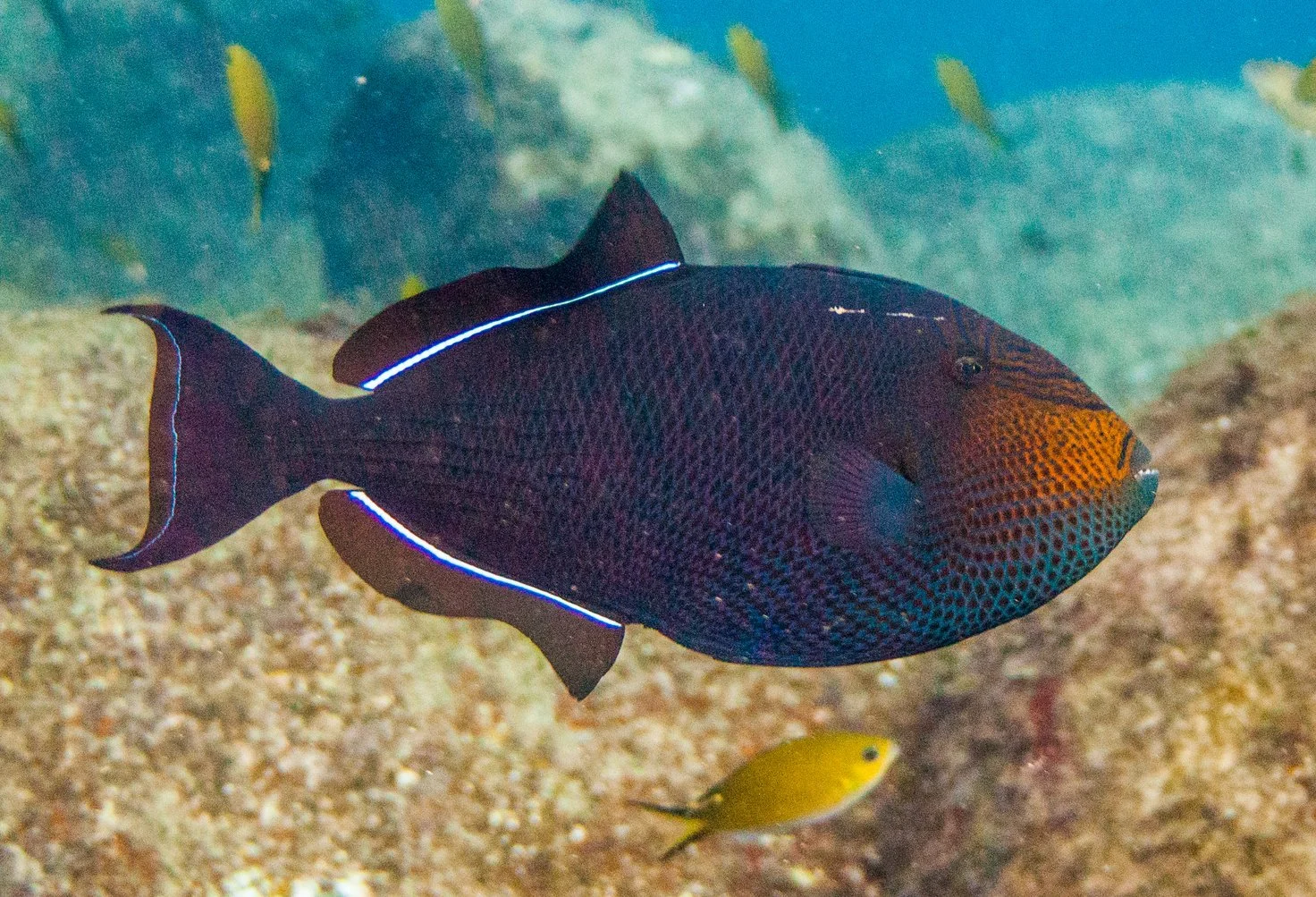
Black Triggerfish
What Do Triggerfish Eat?
Triggerfish are opportunistic feeders with powerful jaws designed to crush hard-shelled prey. Their diet includes:
• Crabs and shrimp
• Mollusks and snails
• Sea urchins
• Coral polyps
• Worms and small fish
• Algae (in small amounts)
Their preference for shelled prey means they’re often seen flipping rocks or blowing jets of water to expose hidden food. They’re especially active around reef structures, coral heads, and tide zones.
Where Triggerfish Live in Hawaii
Triggerfish inhabit:
• Shallow coral reefs
• Lagoons and tidepools
• Rocky shorelines and reef flats
• Drop-offs and outer reef slopes
• Deep reefs (for larger species like the gray triggerfish)
They are widely distributed throughout the main Hawaiian Islands — Oahu, Maui, Kauai, the Big Island, and beyond. Their visibility in snorkel and dive spots makes them one of the most recognizable reef fish in the Pacific.
How to Fish for Triggerfish in Hawaii
Though not always a primary target, triggerfish are highly catchable — and often a surprising challenge due to their toughness and teeth.
Shore Fishing or Light Tackle Fishing
• Rod & Reel Setup: Medium spinning gear with 10–15 lb test line
• Hook Size: Small but strong (size 4–1)
• Bait:
• Squid
• Shrimp
• Small crab chunks
• Sand fleas or other crustaceans
• Technique: Bottom fishing with small pieces of bait near rocks or reefs. Cast near structure, let the bait sit, and wait for a strong pull or series of quick bites.
Spearfishing
• Triggerfish are common targets for spearfishers, especially black durgon and pinktail species. Their size and abundance make them a reliable source of protein for local divers.
Caution: Some larger reef species may carry ciguatera toxin, particularly in tropical areas. Always check local safety guidelines or with experienced fishermen before eating reef fish.
Why Are They So Feisty?
Triggerfish may not be large, but they are incredibly territorial, especially when guarding nests. They’ll defend their space aggressively, sometimes charging divers or other fish. This boldness makes them easy to spot — and sometimes easy to hook — but it also means you need strong gear and tough hooks, as their teeth can crush or cut tackle quickly.
Triggerfish may not have the same fame as tuna or mahi mahi, but they’re an unforgettable part of Hawaiian waters. Whether you’re admiring the vibrant Humuhumunukunukuāpua‘a or hauling in a hefty gray trigger from a reef drop-off, triggerfish offer fun, food, and a unique challenge for anglers of all skill levels.
Their presence in Hawaii’s reefs is a testament to the islands’ marine richness — and a reminder that sometimes, the best catches aren’t the biggest, but the boldest.
Next time you fish the islands, don’t overlook the triggerfish — they might just surprise you.
Thanks for reading this blog post! If you’re a fishing fanatic like me, show your passion by rocking one of the fishing shirts available in my shop. Every purchase helps support my mission to spread the joy of fishing, protect the waters we love, and keep the spirit of the outdoors alive.
Tight lines,
Danny Egan
Egan Fishing
