
Poppers for Panfish Fly Fishing: Best Patterns, Techniques, and Tips for Success
If you’ve never thrown a popper at hungry panfish, you’re missing out on some of the most fun and action-packed fly fishing there is. Watching a bluegill, crappie, or pumpkinseed explode on a small topwater fly is pure magic — and it’s way more technical (and satisfying) than some people realize.
Let’s break down the best popper patterns, colors, when and where to use them, how to fish them, and a few best practices to help you get the most out of every cast.
What Are Poppers?
Poppers are small floating flies (or lures) designed to create noise, splash, and commotion on the surface of the water. For panfish, this triggers a primal reaction — it looks like an easy meal struggling on top.
Made with foam, cork, or hard plastic heads, poppers usually have a flashy, buggy body, rubber legs, and sometimes even feathers or hackle to add motion. The signature “pop” comes from the concave face of the fly splashing water on every strip.
Best Popper Patterns for Panfish
Here are some tried-and-true poppers that belong in every panfish fly box:
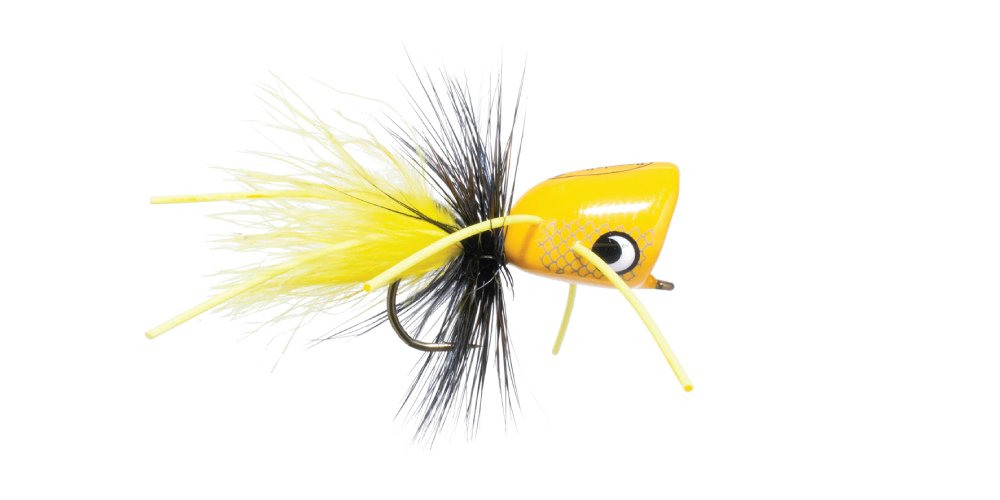
BoogleBug Popper
1. BoogleBug Popper
• Why it Works: Durable foam body with lifelike legs and irresistible wobble.
• Best Use: Targeting bigger bluegill and crappie around structure.
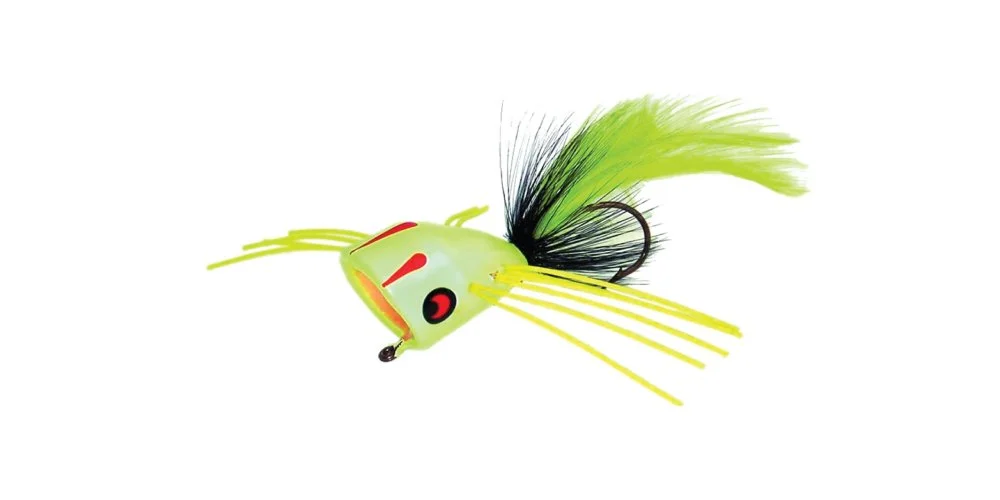
Betts Popper
2. Betts Popper
• Why it Works: Classic cork-bodied design with a natural profile.
• Best Use: Calm, clear mornings when subtle presentations are key.
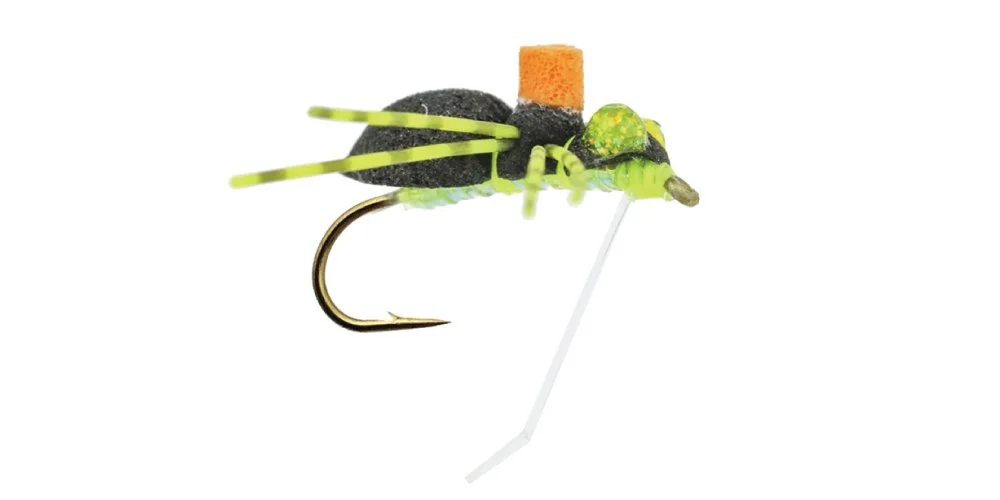
Foam Spider
3. Foam Spider
• Why it Works: Small profile with lots of rubber leg movement.
• Best Use: Slower presentations when fish are spooky.
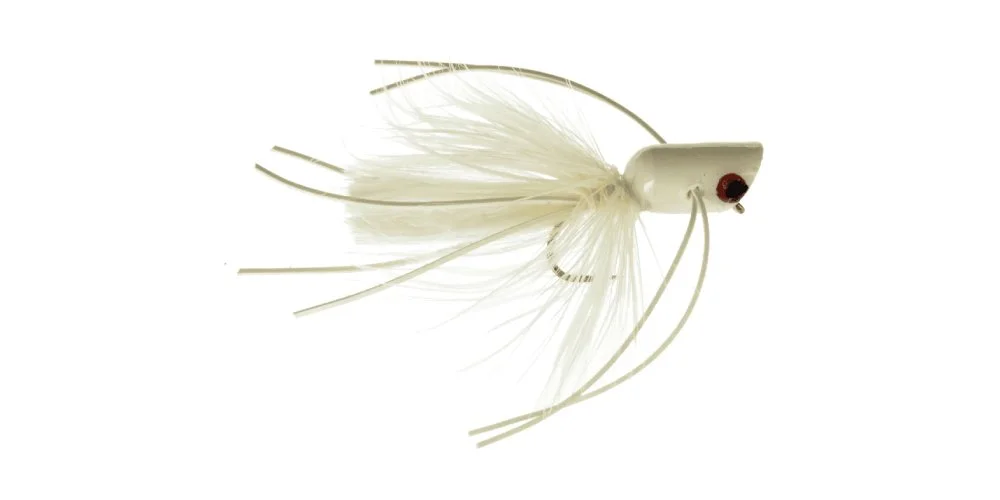
Panfish Popper with Marabou Tail
4. Panfish Popper with Marabou Tail
• Why it Works: Added movement even when the popper is sitting still.
• Best Use: Late evening when fish are keyed in on surface activity.
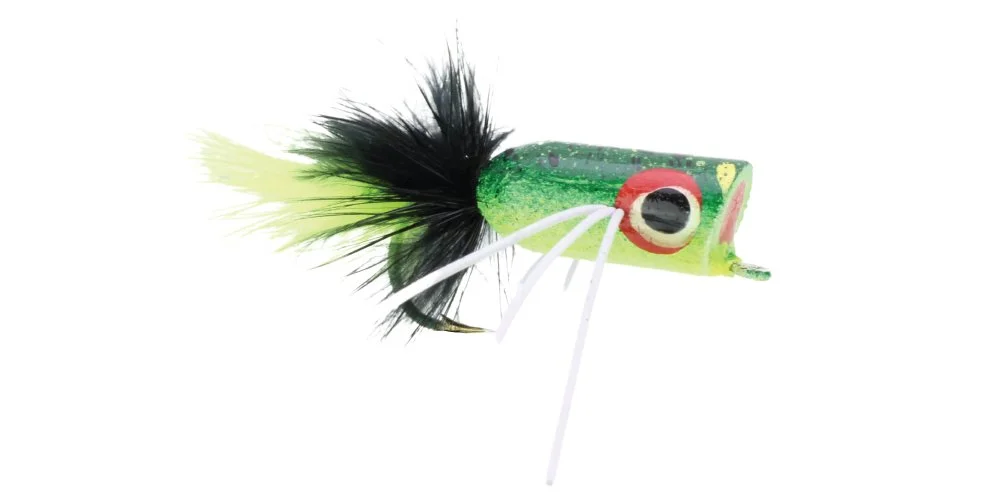
Mini Hardbody Popper
5. Mini Hardbody Popper
• Why it Works: Durable and effective when fishing heavy cover.
• Best Use: Tossing into brush piles, lily pads, or tight pockets.
Best Colors for Panfish Poppers
Choosing the right color often depends on light conditions and water clarity:
• Bright Colors (Chartreuse, Yellow, White): Best for murky water or low-light conditions.
• Natural Colors (Olive, Brown, Black): Best for clear water and spooky fish.
• Dark Colors (Black, Purple): Ideal for evening and low-light because they silhouette better against the sky.
Tip: A black popper at sunset can be absolutely deadly.
When and Where to Use Poppers
When to Use Poppers:
• Late Spring through Early Fall: When water temps are warm and panfish are shallow.
• Morning and Evening: During low-light hours, panfish are most active near the surface.
• During the Spawn: When panfish are guarding nests in shallow water (late spring to early summer).
Where to Use Poppers:
• Weed Beds and Lily Pads: Fish love to ambush from cover.
• Shorelines with Overhanging Trees: Natural cover where bugs and bait fall into the water.
• Edges of Docks and Piers: Structure attracts panfish looking for shade and food.
• Slow-moving Backwaters and Ponds: Calm water is perfect for popper action.
Look for calm conditions — a glassy surface makes poppers much more effective.
How to Fish Poppers for Panfish
Fishing poppers is about creating the right rhythm and giving fish time to react:
Basic Technique:
1. Cast near structure or cover.
2. Let the popper sit after landing. Sometimes a fish will hit it immediately.
3. Twitch it gently with short strips of your fly line, making it “pop” and splash a little.
4. Pause frequently. Sometimes long pauses (5–10 seconds) are more effective than constant movement.
5. Set the hook with a strip-set rather than lifting your rod — you’ll get better hookups.
Retrieve Ideas:
• Twitch-twitch-pause (great for aggressive fish).
• Slow pulls and long pauses (great for lazy or pressured fish).
• Fast popping retrieve (triggers reaction strikes when fish are active).
Best Practices for Popper Success
• Use a Floating Line: WF (weight forward) floating lines make casting small poppers easier.
• Short Leader: 7.5’ or shorter leaders (around 4X-5X tippet) help you control the popper better.
• Stay Stealthy: Panfish in shallow water can be spooky — avoid loud movements or big splashes.
• Watch the Popper Carefully: Sometimes the popper disappears without a big splash — set the hook anytime it moves strangely.
• Match Size to the Fish: Big poppers might intimidate small fish. Use smaller poppers (size 8–12) for bluegill and crappie.
Panfish popper fishing is fly fishing at its most fun — it’s visual, active, and ultra-rewarding. With the right poppers, a good rhythm, and a bit of stealth, you can experience nonstop action on ponds, lakes, and backwaters all season long.
Grab a handful of poppers, hit the water at sunset, and get ready for some epic surface blowups!
Thanks for reading this blog post! If you’re a fishing fanatic like me, show your passion by rocking one of the fishing shirts available in my shop. Every purchase helps support my mission to spread the joy of fishing, protect the waters we love, and keep the spirit of the outdoors alive.
Tight lines,
Danny Egan
Egan Fishing
