
The Improved Clinch Knot: A Must-Know for Every Angler
If you were only going to learn one fishing knot to cover most of your needs, the Improved Clinch Knot might just be the one. Known for its simplicity, strength, and versatility, this knot has been a go-to for generations of anglers—beginners and pros alike.
Whether you’re tying on a hook, lure, or swivel, the improved clinch knot delivers consistent performance without requiring complicated wraps or advanced skills. It’s reliable, quick to tie, and holds strong under pressure, making it an essential knot for both fresh and saltwater fishing.
Why the Improved Clinch Knot Is One of the Best
There are dozens of knots out there, but the improved clinch stands out for a few key reasons:
• ✅ Easy to learn and remember
• ✅ Strong and secure, especially with monofilament and fluorocarbon
• ✅ Quick to tie in most conditions—even with cold fingers
• ✅ Compact—passes easily through rod guides and doesn’t interfere with lure action
• ✅ Versatile—great for tying hooks, flies, swivels, and light lures
While it’s not ideal for super heavy braid or big game fish, it’s perfect for everyday fishing—trout, bass, panfish, surf, and even light saltwater species.
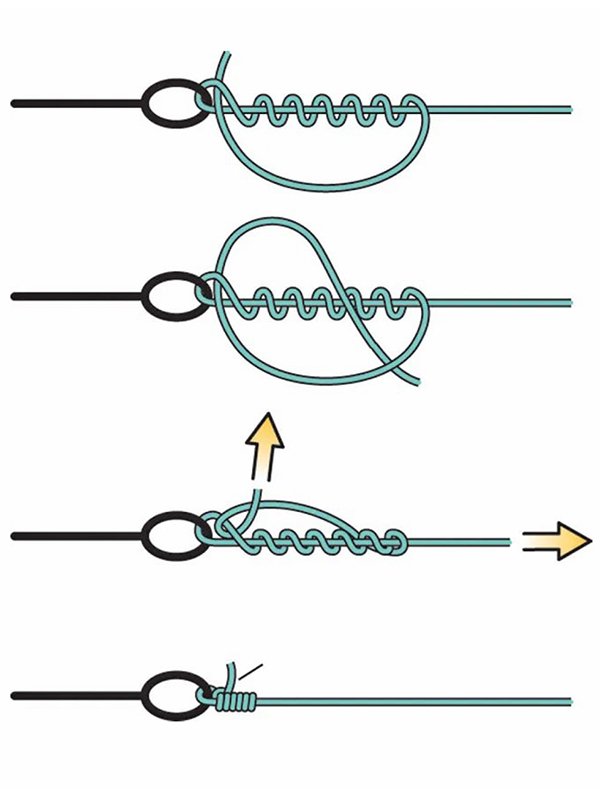
Improved Clinch Knot Diagram
How to Tie the Improved Clinch Knot
Step-by-step instructions:
1. Thread the line through the eye of the hook or lure, leaving 6–8 inches of tag end.
2. Wrap the tag end around the standing line 5–7 times.
3. Thread the tag end back through the small loop just above the eye.
4. Then, pass it through the larger loop that’s formed.
5. Wet the knot (with water or saliva) to reduce friction and prevent heat damage.
6. Pull it tight by pulling on the standing line while holding the tag.
7. Trim the tag end close to the knot.
✅ Tip: Use fewer wraps (4–5) for heavier lines and more wraps (6–7) for lighter lines.
When and Where to Use It
The Improved Clinch Knot is ideal for:
• Fly fishing: Perfect for attaching tippet to flies
• Spinning and baitcasting setups: Great for tying on lures and hooks
• Panfish, bass, trout, surf fishing: Holds well under most conditions
• Swivels and snaps: Easy and fast connection point
• Light saltwater gear: Works well with mono/fluoro up to 20–25 lb test
It’s most effective with monofilament and fluorocarbon lines. If you’re using braided line, consider a different knot like the Palomar or Double Uni, as braid can slip more easily.
Why It Works So Well
The Improved Clinch Knot tightens under pressure, cinching down on itself in a way that spreads the stress across the wraps. The added step—passing the tag end through the extra loop—improves the strength and reduces slippage compared to the standard clinch knot.
Its low-profile shape also makes it ideal for casting and retrieving, and it doesn’t damage or kink the line like some bulkier knots can.
If you’re just getting started in fishing, or even if you’ve been at it for years, the Improved Clinch Knot is one of the most useful and versatile tools you can have in your skillset. It’s simple, fast, and tough—exactly what you want in a knot when the bite is on and your hands are cold.
🎣 Master this knot and you’ll be ready for most situations that come your way.
Thanks for reading this blog post! If you’re a fishing fanatic like me, show your passion by rocking one of the fishing shirts available in my shop. Every purchase helps support my mission to spread the joy of fishing, protect the waters we love, and keep the spirit of the outdoors alive.
Tight lines,
Danny Egan
Egan Fishing
